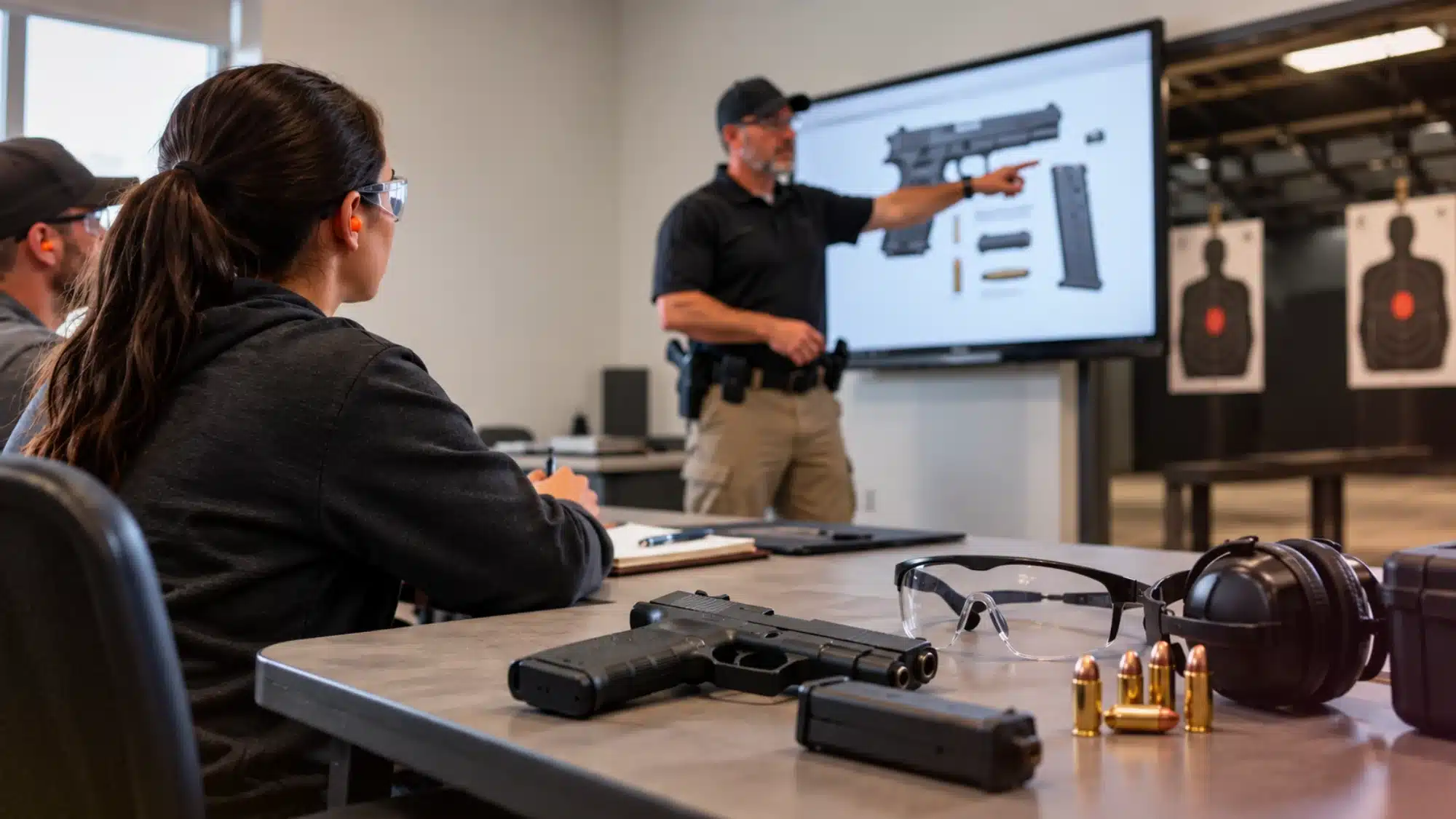

Searches for “how do you get a gun license” often start with a misleading assumption: Connecticut issues one document covering every firearm activity. In reality, the rules distinguish carrying a pistol from purchasing certain firearms. For readers in Salem and neighboring communities, October is a useful time to sort out common misunderstandings before choosing safety education. Vantage Point Firearms & Training Center offers instruction, but licensing decisions belong to Connecticut authorities.
Myth 1: Every Firearm Uses the Same License
Connecticut has a State Permit to Carry Pistols and Revolvers, along with separate eligibility certificates associated with handgun and long-gun purchases. These documents do not confer identical permissions. Ask which activity you are researching instead of using “gun license” as a catchall term. Vantage Point’s pistol permit class details describe an education offering, not a state-issued credential.
Myth 2: Any Safety Class Satisfies the Requirement
For a Connecticut pistol permit, the state requires qualifying handgun safety training with live-fire instruction. A beginner awareness session may be informative without meeting that specific standard. Review Vantage Point’s firearms safety overview to understand its educational focus, then confirm that the particular course meets current state requirements.
Before registering, consider asking:
- Does this course cover the required permit-training curriculum?
- What documentation is provided after completion?
- Are there prerequisites, equipment rules, or additional costs?
Completing a class does not guarantee approval or authorize carrying. Even when training is required, applicants must still satisfy the separate legal standards relevant to the credential they seek.
Myth 3: Applications Are Approved Automatically After Training
Training is only one part of the state’s review. Eligibility considerations include age, legal status, disqualifying circumstances, background checks, and suitability requirements. Connecticut residents generally begin the pistol permit process with a local issuing authority, while nonresidents follow a different state application route. An application can be approved or denied based on the legal criteria; no instructor can promise a particular outcome.
Myth 4: Everyone Must Attend an Interview and Wait the Same Amount of Time
The original article treats an interview as a universal requirement and suggests a predictable approval timeline. Neither is a sound assumption. Processes and practical wait times can vary, and applicants should follow the instructions supplied by the relevant authority. Avoid making travel or purchasing plans around an expected decision date. If official guidance and a promotional course description seem inconsistent, prioritize the state agency’s current instructions.
Vantage Point publishes its October training calendar, including scheduled pistol permit classes. Class dates are not permit-processing appointments, and listings may change.
Myth 5: A Permit Lasts Forever Once Issued
Connecticut state pistol permits generally last five years. State guidance describes mailed or online renewal options and a 90-day grace period after expiration for renewal. That grace period should not be mistaken for permission to carry on an expired permit. Check current renewal instructions well before the expiry date and keep contact information updated with the issuing authority.
Myth 6: The Training Center Makes the Legal Decision
Vantage Point’s instructors and training team provide education, not government determinations. The center also offers private lessons for further supervised instruction. These services can support safety knowledge, but questions about eligibility, application status, appeals, or renewal belong with the appropriate state or local office.
Make October a Month for Clearer Questions
Good preparation begins by separating three things: legal requirements, the training you want, and safe long-term responsibilities. Ask what a course teaches and what it does not certify. Keep official instructions as the final authority, especially when rules or forms change. For information about training options in Salem, contact Vantage Point to discuss class content and scheduling. Understanding the myths first makes the next conversation more productive without confusing education with authorization.